Ashwagandha for Men: What It Is, What the Research Says and Why It's in IronPulseX
The Short Answer
Ashwagandha (Withania somnifera) is an Ayurvedic root best known as an adaptogen: according to the U.S. National Center for Complementary and Integrative Health (NCCIH), some preparations may help with stress and insomnia, and there is limited evidence that 2 to 4 months of use may raise testosterone and support sperm quality. For men, its real value is supporting how the body copes with stress and sleep, two of the biggest hidden drains on energy and drive. That is exactly the supporting role it plays in IronPulseX, next to Tongkat Ali 200mg.
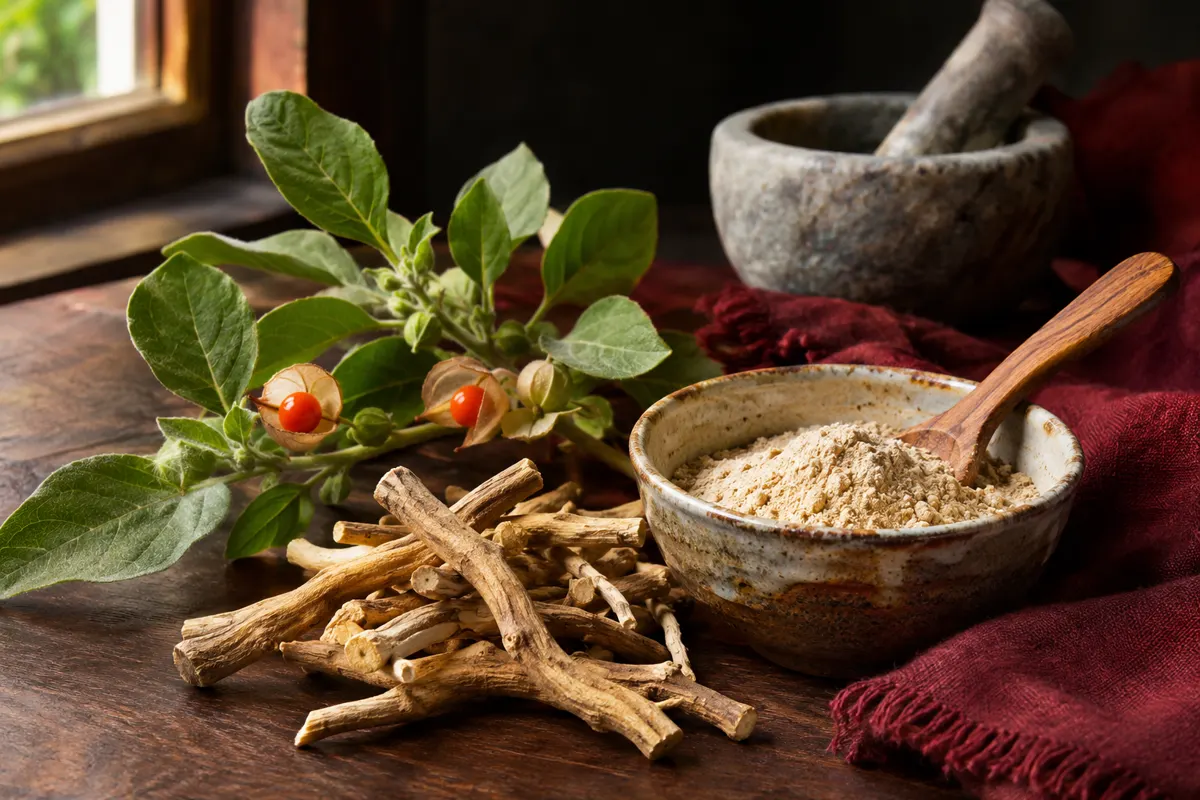
Ashwagandha has gone from an obscure Ayurvedic herb to one of the most searched supplements among American men. Part of that is marketing, but part of it is that ashwagandha has more human trials behind it than most botanicals in the men's aisle. In this deep dive we look at one ingredient only: what it is, what the better research actually found, what dose those studies used, who should skip it, and why it earns its place on the IronPulseX label.
What Is Ashwagandha?
Ashwagandha is an evergreen shrub that grows in parts of India, Africa and the Middle East. It belongs to the nightshade family, the same botanical family as tomatoes and peppers, and it is sometimes called "Indian ginseng" or "winter cherry" because of the small orange-red berries that ripen inside papery husks. The part used in supplements is the root, which is dried and either ground into powder or concentrated into an extract.
The name comes from Sanskrit and is usually translated as "smell of the horse", a nod both to the root's earthy smell and to the traditional belief that it gives the strength and vigor of a horse. In Ayurveda, India's traditional medicine system, it has been used for centuries as a rasayana, a tonic meant to support vitality and resilience.
The compounds researchers focus on are called withanolides, natural steroidal lactones that NCCIH notes have been linked to anti-inflammatory and antioxidant activity. Better extracts are standardized to a stated withanolide percentage, which is one reason two ashwagandha products with the same milligram number can behave differently.
Why Men Care: Stress, Sleep and Drive
Most men who feel flat in their 40s and 50s do not have one dramatic problem. They have a stack of small ones: chronic work stress, short or broken sleep, a few extra pounds and less time to train. As we explain in why stamina fades after 40, these everyday factors often matter more than age itself. Ashwagandha's reputation is built on exactly that territory, which is why it is called an adaptogen: something traditionally used to help the body adapt to stress.
What the Research Actually Found
We only cite studies we have opened and read. Here is what the most relevant human trials and reviews say, in plain English:
| Topic | What the study found | How strong |
|---|---|---|
| Stress and sleep | NCCIH: some ashwagandha preparations may be effective for insomnia and stress; evidence for anxiety is less clear. | Moderate, many small trials |
| Sleep (meta-analysis) | 5 randomized trials, 400 adults: a small but significant improvement in overall sleep, stronger at 600mg a day or more and after 8+ weeks (Cheah 2021). | Moderate |
| Testosterone, men 40–70 | Overweight men with mild fatigue: 14.7% greater rise in salivary testosterone and 18% greater rise in DHEA-S vs placebo over 8 weeks; fatigue, vigor and sexual well-being scores did not differ between groups (Lopresti 2019). | Small, single trial |
| Strength training, men 18–50 | 57 men new to lifting, 300mg root extract twice daily for 8 weeks: greater gains in bench-press and leg-extension strength and in muscle size than placebo (Wankhede 2015). | Small, single trial |
| Testosterone overall | NCCIH: limited evidence that 2–4 months of use may raise testosterone and improve sperm quality. | Promising, not settled |
The honest summary: ashwagandha is one of the better-studied men's botanicals, the signals for stress, sleep and training are consistent across several small trials, and the testosterone findings are encouraging but modest. It is a support ingredient, not a hormone, and that is exactly how a well-built formula should use it.
A note on dose
Study doses vary widely because extracts differ. The strength-training trial used 600mg of root extract a day, and the sleep meta-analysis saw larger effects at 600mg or more. That matters for reading any label: a product that lists ashwagandha in a supporting role at a lower amount is not trying to copy a single trial; it is pairing a moderate amount of an adaptogen with a lead ingredient. If you want to understand how to read extract labels in general, our guide on how to read a Tongkat Ali label covers ratios, standardization and milligrams.
Ashwagandha vs. Tongkat Ali: Different Jobs
Men often ask which one to take. They are not rivals. Tongkat Ali is the ingredient with the strongest human data on testosterone support in older men, while ashwagandha's strength is the stress-and-sleep side of the equation. Stress hormones and poor sleep are among the most common reasons men feel low even when nothing is "wrong". Putting the two together covers both the hormonal pathway and the everyday drains on it. We compare them head to head, with maca, in Tongkat Ali vs. Ashwagandha vs. Maca, and look at the sleep side in why you wake up tired even after 8 hours.
How Men Use Ashwagandha in Real Life
- Consistency beats timing. Most trials ran 8 to 12 weeks. Pick a fixed daily cue, such as breakfast, and stick with it.
- Pair it with the basics. Seven-plus hours of sleep, resistance training two or three times a week and a sensible waistline do more than any single ingredient.
- One product, not five. Stacking several stand-alone ashwagandha, Tongkat Ali and maca bottles gets expensive and confusing. A combined formula with every dose printed is simpler to follow.
- Judge it fairly. Keep a simple note of energy, sleep and mood every week and review it after two to three months.
Safety: Who Should Talk to a Doctor First
Ashwagandha is generally well tolerated in short-term studies, but botanicals are not inert. According to NCCIH:
- Short-term use (up to about 3 months) may be safe; long-term safety is not well studied.
- Possible side effects include drowsiness, stomach upset, diarrhea and vomiting. Rare cases of liver injury have been linked to ashwagandha supplements.
- Avoid it during pregnancy and breastfeeding, before surgery, with autoimmune or thyroid disorders, and with hormone-sensitive prostate cancer.
- Possible interactions with medicines for diabetes, blood pressure, thyroid, seizures, sleep (sedatives) and the immune system.
If any of these apply to you, or you take prescription medication, ask your doctor before starting any supplement that contains ashwagandha.
Why Ashwagandha Is in IronPulseX
IronPulseX is built around a clear hierarchy, and every dose is printed on the label: Tongkat Ali 200mg leads, with Ashwagandha 100mg and Maca 100mg right behind, plus Beet Root, Grape Seed and L-Arginine in smaller amounts. Ashwagandha's job in that lineup is the stress-and-recovery side of men's vitality, complementing the testosterone support Tongkat Ali is known for. It is a smart pairing: the formula addresses both the pathway and the everyday pressures that drain it, in one gummy a day instead of a handful of separate capsules. You can see how each ingredient fits in our IronPulseX review.
Our Recommendation: IronPulseX
If you like what ashwagandha brings to the table but do not want to juggle separate bottles, IronPulseX is the option we recommend. It combines a supporting amount of ashwagandha with the ingredient that has the strongest human evidence for men's energy and drive: Tongkat Ali at 200mg per serving, the dose that pulled ahead of placebo on testosterone from week 4 in a 2021 randomised trial in men aged 50–70 (PMID 34262417).
- Two jobs, one gummy: Tongkat Ali for the hormonal side, ashwagandha for the stress-and-sleep side.
- Transparent formula: no proprietary blend, every dose on the label.
- Easy to stick with: a chewable gummy, which is what makes an 8–12 week routine realistic.
- Made properly: Aurora, Colorado, in an FDA-registered, GMP-certified facility.
- Fair official pricing: 2 bottles $178 ($89 each, plus shipping), 3 bottles $216 ($72 each, free shipping), 6 bottles $294 ($49 each, free shipping).
- 60-day money-back guarantee: no bottles to mail back.
Give it 8–12 weeks of daily use alongside good sleep and training; the 3- or 6-bottle package is the better value for that. Results vary from man to man, and IronPulseX supports healthy energy and drive as part of a good routine; it is not a treatment for any medical condition. Compare the packages on our IronPulseX pricing page.

IronPulseX: Tongkat Ali + Ashwagandha in one gummy
A transparent male vitality gummy led by Tongkat Ali 200mg with Ashwagandha 100mg, every dose on the label, made in an FDA-registered, GMP-certified facility. From $49 per bottle with a 60-day guarantee.
Frequently Asked Questions
What does ashwagandha do for men?
Ashwagandha is an adaptogenic root used in Ayurveda. According to NCCIH, some preparations may help with stress and insomnia, and there is limited evidence that taking it for 2 to 4 months may raise testosterone and improve sperm quality. For men, its most practical role is supporting how the body handles stress and sleep, two of the biggest everyday drains on energy and drive.
Does ashwagandha increase testosterone?
Some small trials suggest a modest effect. In a 2019 crossover trial in overweight men aged 40 to 70, a standardized extract was linked with a 14.7% greater increase in salivary testosterone than placebo over 8 weeks, although fatigue and sexual well-being scores did not differ between groups. NCCIH describes the testosterone evidence as limited.
How much ashwagandha did the studies use?
Doses vary by extract. The resistance-training trial in young men used 300mg of root extract twice a day (600mg total), and a sleep meta-analysis found larger effects at 600mg a day or more and after 8 weeks or longer. IronPulseX includes 100mg as a supporting ingredient next to its lead ingredient, Tongkat Ali 200mg.
How long does ashwagandha take to work?
Most human trials ran 8 to 12 weeks, so think in months, not days. Take it consistently and judge your routine after a fair trial period.
Who should not take ashwagandha?
NCCIH advises avoiding ashwagandha during pregnancy and breastfeeding, before surgery, with autoimmune or thyroid disorders and with hormone-sensitive prostate cancer. It may interact with medicines for diabetes, blood pressure, thyroid, seizures, sleep and the immune system, and rare cases of liver injury have been reported. Ask your doctor first if any of that applies to you.
Can I take ashwagandha every day?
NCCIH says ashwagandha may be safe in the short term, up to about 3 months, and long-term safety is not well studied. Follow the label, take the serving shown, and talk to your doctor about longer use.
References
Prices, guarantee and manufacturing details are taken from the official IronPulseX offer. Every source below was opened and checked.
- National Center for Complementary and Integrative Health (NCCIH). Ashwagandha. — nccih.nih.gov/health/ashwagandha
- Cheah KL, et al. Effect of Ashwagandha (Withania somnifera) extract on sleep: a systematic review and meta-analysis. PLoS One. 2021;16(9):e0257843. — PMID 34559859
- Lopresti AL, et al. A randomized, double-blind, placebo-controlled, crossover study examining the hormonal and vitality effects of ashwagandha in aging, overweight males. Am J Mens Health. 2019;13(2). — PMID 30854916
- Wankhede S, et al. Examining the effect of Withania somnifera supplementation on muscle strength and recovery: a randomized controlled trial. J Int Soc Sports Nutr. 2015;12:43. — PMID 26609282
- Chinnappan SM, et al. Tongkat Ali standardised aqueous root extract, 2021 RCT, 105 men aged 50–70. Food Nutr Res. 2021;65. — PMID 34262417