How to Read a Tongkat Ali Label: 200:1, Eurycomanone % and mg Explained
The Short Answer
On a Tongkat Ali label, the number that matters most is a clearly printed dose of about 200mg per daily serving, in a fully disclosed formula — not the size of the extract ratio. Ratios like 100:1 or 200:1 are not standardised and cannot be checked from the bottle, while a quantified eurycomanone percentage and a named, GMP-certified maker are things you can actually verify. IronPulseX, the routine we recommend, prints its Tongkat Ali 200mg and every other amount right on the label.
Tongkat Ali labels are some of the most confusing in the supplement aisle. One bottle shouts "200:1!", another says "2% eurycomanone", a third just lists a "Male Vitality Matrix 800mg". They all look strong. They are not all saying the same thing.
This guide walks through every term you are likely to see, line by line, and tells you what it means in practice. Where something cannot be verified, we say so plainly.
Start With the Supplement Facts Panel, Not the Front
The front of the bottle is marketing. The Supplement Facts panel on the side or back is where the real information lives. Before you look at anything else, find these three lines:
- Serving size. "1 gummy", "2 gummies", "2 capsules". Every amount below is per serving, not per piece.
- Servings per container. This tells you how long the bottle really lasts at the full dose.
- The ingredient line for Tongkat Ali. It should name the plant (often as Eurycoma longifolia), the part used (root) and an amount in mg.
A surprising number of men take one gummy a day from a bottle whose label dose is based on two, and then wonder why nothing changes. Reading the serving line first prevents that mistake.
The Terms You Will See (and What They Really Mean)
| Label term | What it means | How much weight to give it |
|---|---|---|
| 200mg (per serving) | The amount of Tongkat Ali in one daily serving | High — this is the number to compare with the research |
| Root extract | A concentrated preparation of the root, not just ground root | High — the human trials used extracts |
| Standardised to X% eurycomanone | A promise of a measurable amount of a key marker compound | High, if a certificate of analysis backs it up |
| 100:1 / 200:1 extract | Claimed amount of raw root per unit of extract | Low — no common standard and not checkable from the bottle |
| "Equivalent to 40,000mg root" | The ratio multiplied by the dose | Low — marketing math based on the same ratio |
| Root powder | Dried, ground root, not concentrated | Low on its own — not what the trials used |
| Proprietary blend | Only the total blend weight is shown | Caution — you cannot see how much Tongkat Ali is inside |
The dose in mg: your anchor number
The strongest human evidence comes from a 2021 randomised, double-blind, placebo-controlled trial of 105 men aged 50–70 with low testosterone (PMID 34262417). It tested 100mg and 200mg a day of a standardised water extract for 12 weeks. The 200mg group pulled ahead of placebo from week 4; the 100mg group only reached a significant difference at week 12. That makes 200mg per day the practical number to look for. We explain the timeline in how long Tongkat Ali takes to work.
Extract ratios (100:1, 200:1): why bigger is not better
A ratio is meant to say how many grams of raw root went into one gram of finished extract. It sounds like potency, but there is no shared rule for how companies calculate it, and nobody can test a ratio from the powder in your hand. Two "200:1" extracts can be completely different products. Treat a ratio as a description of the process, never as proof of strength — and be especially wary of "equivalent to 40,000mg" claims built on top of it.
Eurycomanone %: the checkable number
Eurycomanone is one of the main marker compounds in Tongkat Ali root and one of the reasons researchers think the plant supports the body's own testosterone system (we cover that in how Tongkat Ali works). When an extract is "standardised to" a percentage of eurycomanone, a lab can measure it. That makes a stated percentage, backed by a certificate of analysis from a named lab, far more meaningful than a ratio. Malaysia, where the plant grows, even has a national specification for freeze-dried water extracts of Tongkat Ali root (MS 2409), which shows how seriously consistency is taken at the source.
Standardised extract vs root powder
The trial above used a standardised water extract. Plain root powder is simply the dried root ground up, with no concentration and no guaranteed marker content. 200mg of powder is not the same thing as 200mg of a quality extract, so look for the word "extract" next to the dose.
Proprietary blends: the biggest blind spot
A "proprietary blend" lists one total weight for several ingredients. It is legal, but it hides the one thing you most need to know: how much Tongkat Ali you are getting. A blend of 500mg could contain 200mg of Tongkat Ali — or 20mg. If the label will not tell you, assume it is not the researched dose.
Deciding between a powder, capsules, drops, tea or a gummy? We compare the formats side by side in tongkat ali powder benefits vs. capsules, drops, tea and gummies.
Other Label Details Worth a Glance
- Where and how it is made. "Made in an FDA-registered facility" and "GMP-certified" mean the factory follows recognised manufacturing practices. Look for a named maker and a real address.
- The supporting cast. Most men's formulas pair Tongkat Ali with other botanicals or nutrients. Check that each one has its own printed amount.
- Format. Capsule, powder or gummy changes nothing about what the label must disclose, but a format you enjoy makes the 8–12 week routine much easier to keep.
- The "Directions" line. It should match the serving size. If directions say "take 1" but the panel is per 2, the bottle is giving you half the dose.
- The guarantee. Not on the panel, but on the box or site. A long money-back window shows the maker expects you to stick with it.
A 30-Second Label Check Before You Buy
Hold the bottle and ask: Can I see the serving size? Does it say Tongkat Ali root extract? Is there a clear mg number, ideally 200mg per daily serving? Is every ingredient amount printed (no proprietary blend)? Is the maker named and GMP-certified? Five yeses, and you are holding a label that respects you.
When we run the published label of IronPulseX through this check, it passes cleanly: Tongkat Ali 200mg per daily serving, every amount printed, a named maker and a GMP-certified facility.
What Men Usually Get Wrong at the Store
Most men buy on the front label: the biggest ratio, the scariest-looking "Extreme" branding or the lowest price per bottle. Then they take it for a week, feel nothing and decide Tongkat Ali "doesn't work". In most cases the problem was never the plant — it was a hidden dose, the wrong serving size or giving up long before week 4. Reading the label correctly and committing to a full routine fixes nearly all of it.
Our Recommendation: IronPulseX
If you want a Tongkat Ali product whose label passes every check above, IronPulseX is the daily routine we recommend. It is built around Tongkat Ali at 200mg per daily serving — the dose that pulled ahead of placebo from week 4 in the 2021 trial (PMID 34262417) — and it hides nothing behind a blend.
- The researched dose, printed clearly: Tongkat Ali 200mg per daily serving, supported by Ashwagandha for the stress side and Maca for desire.
- Fully disclosed label: every ingredient amount is printed — no proprietary blend.
- Easy to keep: a daily gummy instead of capsules, which makes a full 8–12 week routine far easier.
- Made properly: produced in Aurora, Colorado, in an FDA-registered, GMP-certified facility.
- Fair pricing: 2 bottles $178 ($89 each, plus shipping), 3 bottles $216 ($72 each, free shipping), 6 bottles $294 ($49 each, free shipping).
- Risk-free: a 60-day money-back guarantee, no need to return the bottles.
Our tip: because Tongkat Ali builds over weeks, the 3- or 6-bottle bundle gives you the better value for a full routine. Results vary from man to man. IronPulseX supports healthy testosterone, energy and drive; it isn't a substitute for medical care if your blood test is clearly low.
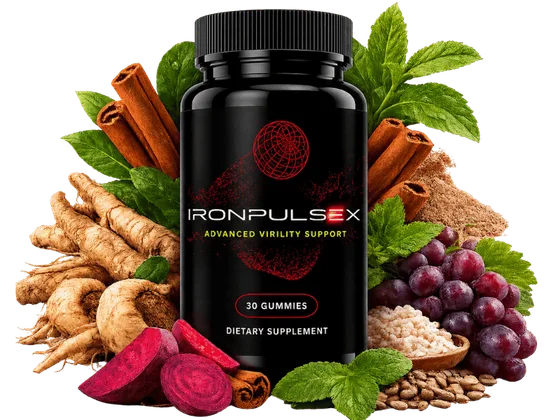
IronPulseX: a label that passes the check
A transparent male vitality gummy led by Tongkat Ali 200mg, every dose on the label, made in an FDA-registered, GMP-certified facility. From $49 per bottle with a 60-day guarantee.
Frequently Asked Questions
What does 200:1 mean on a Tongkat Ali label?
An extract ratio such as 100:1 or 200:1 is meant to say how much raw root went into each unit of finished extract. The problem is that there is no common standard for how the ratio is calculated, and it cannot be checked from the finished powder. A big ratio sounds impressive but says nothing reliable about how much of the active compounds you get.
What is eurycomanone and why is it on the label?
Eurycomanone is one of the main marker compounds in Tongkat Ali root. When a label says an extract is standardised to a percentage of eurycomanone, it is promising a measurable amount of that marker, which a lab can test. A quantified percentage backed by a certificate of analysis tells you more than a ratio on its own.
How much Tongkat Ali should a label show per day?
The best placebo-controlled trial in older men with low testosterone (PMID 34262417) used 200mg a day of a standardised water extract, and the 200mg group pulled ahead of placebo from week 4. A clearly printed 200mg per daily serving is the number to look for.
Is a proprietary blend bad on a Tongkat Ali supplement?
A proprietary blend is legal, but it only shows the total weight of the blend, not how much of each ingredient is inside. That means you cannot tell whether you are getting the researched 200mg of Tongkat Ali. A fully disclosed label, with every amount printed, is the safer choice.
Is Tongkat Ali root powder the same as an extract?
No. Plain root powder is simply dried, ground root. An extract is concentrated, and a standardised extract is checked for a consistent amount of marker compounds. The human trials used extracts, so 200mg of raw powder is not the same as 200mg of the extract that was studied.
Is the mg on the label per gummy or per serving?
Always check. Supplement Facts panels list amounts per serving, and a serving may be one, two or more gummies or capsules. Read the serving size line first, then the mg, so you know exactly how much you take each day.
References
Every source below was opened and checked. We do not cite a PMID we have not verified.
- Chinnappan SM, et al. Tongkat Ali standardised aqueous root extract, 2021 RCT, 105 men aged 50–70, 100mg / 200mg / placebo, 12 weeks. Food Nutr Res. 2021;65. — PMID 34262417
- Department of Standards Malaysia. MS 2409:2011 — Phytopharmaceutical aspect of freeze dried water extract from Tongkat Ali roots — Specification.