Where Does Maca Come From? The History of the Andes' "Fertility Root" and What Science Says Today
The Short Answer
Maca is a root vegetable from the high Andes of central Peru, grown at about 4,000–4,500 metres on the Junín plateau, and it was probably domesticated there some 1,300 to 2,000 years ago. Andean families dried it, stored it for years and boiled it into food and drinks; Spanish chroniclers in the 1500s and 1600s recorded its reputation for strength and fertility. Modern trials back a narrower version of that story: maca supports sexual desire, but it does not raise testosterone. That is why today's best men's formulas pair it with a botanical that does, such as Tongkat Ali in IronPulseX, the daily routine we recommend.
Maca powder sits on supermarket shelves next to protein and oat milk now, but the plant it comes from grows in one of the harshest farming environments on earth: a cold, windy, high-altitude grassland where frost can arrive on almost any night of the year. Knowing where maca comes from explains a lot about how it was used, why its reputation grew, and what you should and should not expect from it today.
The Plant: A Radish Cousin From the Roof of Peru
Maca's botanical name is Lepidium meyenii. It is a member of the cabbage and mustard family (Brassicaceae), which makes it a relative of radish, turnip and watercress — not of ginseng, despite the "Peruvian ginseng" nickname it picked up in marketing. The part people eat is the swollen root-like base, technically a hypocotyl, roughly the size of a small radish or a golf ball.
According to a detailed 2012 review by Peruvian researcher Gustavo Gonzales (PMID 21977053), maca grows exclusively in the central Andes between about 4,000 and 4,500 metres. Very few crops survive up there. The same review describes a striking range of colours, with researchers in Carhuamayo, Junín, recording 13 colours from white to black; the yellow, red and black types are the ones you see sold today.
Domestication: 1,300 to 2,000 Years on the Junín Plateau
The Gonzales review states that maca was probably domesticated in San Blas, Junín (present-day Ondores), some 1,300–2,000 years ago. That places its origin well before the Inca empire, which only expanded across the Andes in the 1400s. So when you read that maca was "the food of Inca warriors", know that the plant is older than the Inca state, and that the popular warrior stories are hard to trace to any verifiable primary source.
What is well documented is the practical side. At that altitude, food that keeps is survival. Maca roots are dried naturally in the sun and can then be stored for many years, becoming, in the review's words, "hard as stone". Before eating, they are boiled in water to soften them. Highland tradition specifically recommends boiling maca before consuming it, and the review notes that drinks and juices made from it are the most frequent form of use.
What the Spanish Chroniclers Wrote
The written history begins with the Spanish conquest:
- 1553 — Pedro Cieza de León. In his chronicle he noted that in the Bombón region (around Lake Junín) the natives used certain roots for their sustenance. The plant is not named, but historians generally take these roots to be maca.
- 1653 — Father Bernabé Cobo. The Jesuit chronicler was the first to describe maca by name and its properties. He recorded that it grew in the harshest, coldest areas of the province where no other food plant would grow — and he also referred to its use for fertility.
You will also find a popular story that Spanish settlers' livestock bred poorly at altitude until they were fed maca. It is a good story and fits the fertility reputation, but we could not trace it to a primary document, so we present it as tradition rather than history.
From Andean Staple to Global Supplement
For centuries maca stayed a local food, known mostly to highland communities. Then, toward the end of the twentieth century, interest from researchers and health-food buyers transformed it. Peru's exports grew quickly: the Gonzales review reports maca exports rising from about US$1.4 million in 2001 to roughly US$6.2 million in 2010. Today maca powder, capsules and blends are sold worldwide, and it has become one of the best-known botanicals in men's vitality products.
Tradition vs. What We Know Today
| What tradition said | What modern research found | Verdict |
|---|---|---|
| Maca gives strength and stamina | Maca is a nutritious, energy-dense food; trials focus on desire and mood, not strength | Plausible as food, not proven as a performance aid |
| Maca boosts fertility and desire | A 12-week placebo-controlled trial found desire improved from week 8 (PMID 12472620) | Supported for desire |
| Maca works like a male hormone | The same trial found serum testosterone did not change versus placebo | Not supported |
| Maca helps erections | A 2010 systematic review found limited evidence from a small number of trials (PMID 20691074) | Promising but not conclusive |
| Always boil maca before eating | Modern powders are often heat-treated ("gelatinized") for easier digestion | Tradition carried into today's processing |
The most important line in that table is the testosterone one. The flagship maca trial is unusually blunt in its own title: an effect on sexual desire with an absent relationship with serum testosterone. Maca does something real, but through a route that is not hormonal. We dig into that in our Tongkat Ali vs. Ashwagandha vs. Maca comparison. Curious how other cultures approach the same goal? See what tongkat ali is used for in Malaysia, plus India and Korea's vitality traditions.
Why the Modern Version Is a Combination, Not Maca Alone
Andean families did not eat maca as a single "men's pill"; they ate it as part of a whole diet. Today the closest equivalent is a formula that combines botanicals that each do a different job. Men who want desire, energy and testosterone support usually end up with three ingredients on their shortlist:
- Tongkat Ali for testosterone and drive — the only one of the three with randomised trial data on testosterone, at 200mg/day of standardised extract (PMID 34262417). We explain the mechanism in how Tongkat Ali works.
- Ashwagandha for the stress side.
- Maca for desire, the role its own research supports.
That is exactly the structure of IronPulseX: Tongkat Ali leads at the researched 200mg dose, with Ashwagandha and Maca alongside it in a single daily gummy.
What People Try Instead
Men who read about maca's history usually try one of three things: a bag of raw powder stirred into a smoothie, a cheap capsule with "maca" in big letters on the front, or a stack of separate bottles for each botanical. The powder is fine as food but the trial doses (1,500–3,000mg a day) mean a heaped spoon every day, and the earthy, malty taste is not for everyone. Front-of-label maca capsules often lean on the testosterone claim maca's own research does not support. And separate bottles rarely survive past week three. A single, clearly labelled daily formula is simply easier to keep.
Our Recommendation: IronPulseX
If maca's story has you interested in an Andean-inspired, plant-based approach to men's vitality, IronPulseX is the modern, practical version we recommend. It puts maca where the research says it belongs — as a desire-supporting ingredient — and builds the formula around Tongkat Ali at 200mg per daily serving, the dose that pulled ahead of placebo on testosterone from week 4 in the 2021 trial in men aged 50–70 (PMID 34262417).
- The right roles for each botanical: Tongkat Ali 200mg leads for testosterone and drive, Ashwagandha 100mg covers stress, Maca 100mg supports desire, with Beet Root, Grape Seed and L-Arginine rounding it out.
- Fully disclosed label: every ingredient amount is printed — no proprietary blend, so you know exactly what you are taking.
- Easy to keep: one daily gummy with breakfast, no earthy powder to mix.
- Made properly: produced in Aurora, Colorado, in an FDA-registered, GMP-certified facility.
- Fair pricing: 2 bottles $178 ($89 each, plus shipping), 3 bottles $216 ($72 each, free shipping), 6 bottles $294 ($49 each, free shipping), with a 60-day money-back guarantee and no need to return the bottles.
Honest note: maca in IronPulseX is a supporting 100mg ingredient, not the 1,500–3,000mg used in maca-only trials; the formula's lead is Tongkat Ali. Give it a full 8–12 weeks — the 3- or 6-bottle bundle is the better value for that. Results vary from man to man, and IronPulseX supports healthy energy and drive; it is not a treatment for any medical condition.
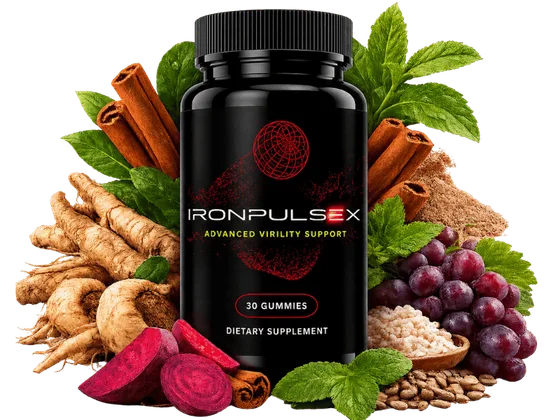
IronPulseX: Tongkat Ali 200mg plus Ashwagandha and Maca
A transparent male vitality gummy led by Tongkat Ali 200mg, with Ashwagandha and Maca, every dose on the label, made in an FDA-registered, GMP-certified facility. From $49 per bottle with a 60-day guarantee.
Frequently Asked Questions
Where does maca come from?
Maca (Lepidium meyenii) comes from the central Andes of Peru, where it grows at roughly 4,000 to 4,500 metres, mainly on the high plateau of Junín around Lake Junín. A 2012 review by Gonzales (PMID 21977053) says it was probably domesticated around San Blas, Junín (today Ondores) some 1,300 to 2,000 years ago.
Is maca an Inca plant?
Maca is older than the Inca empire. Its domestication is estimated at 1,300 to 2,000 years ago, centuries before the Inca state expanded in the 1400s. Popular stories about Inca warriors eating maca before battle are widely repeated but we could not find them in a verifiable primary source, so treat them as legend.
Why is maca called a fertility root?
Because the reputation is old. The Jesuit chronicler Bernabé Cobo, who described maca by name in 1653, also recorded its use for fertility, and highland families have long associated it with fertility in people and animals. Modern research supports a narrower claim: maca has trial evidence for improving sexual desire, while its effect on erectile function is less conclusive.
Does maca raise testosterone?
No. The 12-week placebo-controlled trial by Gonzales and colleagues (PMID 12472620) found sexual desire improved from week 8 while serum testosterone did not change versus placebo. Maca appears to work through a non-hormonal route. If testosterone is the goal, Tongkat Ali is the botanical with randomised trial data at 200mg per day (PMID 34262417).
How was maca traditionally eaten?
Highland families sun-dried the roots, which then keep for years and become very hard, and boiled them before eating. Dried maca was cooked into porridges and drinks. Highland tradition recommends boiling maca before consuming it, which is one reason many modern powders are heat-treated, sold as gelatinized maca.
What is the best way to take maca today?
Trials that studied maca alone used about 1,500 to 3,000mg of powder a day for 8 to 12 weeks. Most men who want broader daily vitality support choose a combined formula instead. IronPulseX, for example, leads with Tongkat Ali 200mg and includes Ashwagandha 100mg and Maca 100mg as supporting ingredients in one daily gummy.
References
Every source below was opened and checked. We do not cite a PMID we have not verified.
- Gonzales GF. Ethnobiology and ethnopharmacology of Lepidium meyenii (Maca), a plant from the Peruvian highlands. Evid Based Complement Alternat Med. 2012. — PMID 21977053
- Gonzales GF, Córdova A, et al. Effect of Lepidium meyenii (MACA) on sexual desire and its absent relationship with serum testosterone levels in adult healthy men. Andrologia. 2002. — PMID 12472620
- Shin BC, Lee MS, et al. Maca (L. meyenii) for improving sexual function: a systematic review. BMC Complement Altern Med. 2010. — PMID 20691074
- Chinnappan SM, et al. Tongkat Ali standardised aqueous root extract, 2021 RCT, 105 men aged 50–70, 100mg / 200mg / placebo, 12 weeks. Food Nutr Res. 2021;65. — PMID 34262417