Does Tongkat Ali Cause Hair Loss? What the Studies, Dermatologists and the DHT Theory Actually Say
The Short Answer
No study in humans has shown that tongkat ali causes hair loss. The concern is a theory: tongkat ali can raise testosterone, and a share of testosterone turns into DHT, the hormone behind male pattern baldness. But none of the tongkat ali trials measured DHT or hair, and dermatology sources agree that pattern hair loss is driven mainly by your genes, not by how much testosterone you have.

"Does tongkat ali cause hair loss?" went from almost nothing to a Breakout search on Google Trends in the United States over the last three months. It is the classic men's supplement fear: anything that touches testosterone must also touch your hairline. To answer it honestly, we put the serious sources side by side and separated what has been measured from what has only been assumed.
Why people link tongkat ali and hair loss
The chain of reasoning goes like this. Tongkat ali (Eurycoma longifolia) is taken to support testosterone. Your body converts a small portion of testosterone into dihydrotestosterone (DHT) with an enzyme called 5-alpha reductase. DHT is the hormone that shrinks genetically sensitive scalp follicles in male pattern baldness. So, the theory says, more testosterone means more DHT, which means more hair loss.
Each step sounds plausible. The problem is that nobody has tested the whole chain with tongkat ali. If you want the basics of how the root works first, our plain-English explainer of the tongkat ali mechanism covers it.
The sources, side by side
We opened every source below. The question for each was the same: what does it actually say about testosterone, DHT and hair?
| Source | What it says | Year |
|---|---|---|
| MedlinePlus Genetics (U.S. National Library of Medicine), androgenetic alopecia | Male pattern hair loss is linked to androgens, especially DHT, together with inherited genetic factors; it often runs in families. | Current |
| American Academy of Dermatology | Hereditary hair loss is the most common cause of hair loss; shedding 50 to 100 hairs a day is normal, and heavy shedding can follow stress or illness by a few months. | Current |
| Leisegang et al., meta-analysis (Medicina) | Across randomized trials in men, tongkat ali raised total testosterone. Hair and DHT were not outcomes. | 2022 |
| George & Henkel, review (Andrologia) | Describes tongkat ali as a "phytoandrogen" that may help restore testosterone in men with low levels. No hair data. | 2014 |
| van der Merwe et al. (creatine, rugby players) | After 3 weeks of creatine, DHT rose 56% while testosterone did not change. Hair was not measured, but this study started the "supplements raise DHT" worry. | 2009 |
| Lak et al., 12-week RCT (creatine) | The first trial to measure hair directly found no change in DHT, the DHT-to-testosterone ratio, hair density or thickness versus placebo. | 2025 |
Why include two creatine studies in a tongkat ali article? Because they show exactly how a hair-loss scare is born and how it gets tested. One small study measured a hormone change, the internet turned it into "creatine makes you bald", and it took 16 years for a trial that actually looked at hair. Tongkat ali is at the first stage of that story: a theory, with no hair study at all.
Where all the sources agree
- No human evidence links tongkat ali to hair loss. None of the trials we have reviewed on this site reported hair loss as a finding, and none measured hair. That is the honest status: not proven, not disproven.
- Genes decide most of the story. MedlinePlus and the AAD both describe pattern hair loss as hereditary. Your follicles' sensitivity to DHT matters more than your testosterone number.
- Hormone changes do not automatically mean hair changes. The creatine trials are the clearest example: a reported rise in DHT in 2009, no measurable effect on hair in 2025.
- Shedding has many common causes. Stress, illness, rapid weight loss and some medicines can cause temporary shedding that appears months later, which is easy to blame on whatever supplement you started recently.
Where they diverge, and why
Theory vs. measurement
Forums and some pharmacy blogs say tongkat ali "could" raise DHT. That is a reasonable hypothesis, but it is not a finding. The trials measured testosterone, cortisol, mood and strength, because those were the questions their authors were asking. Until a trial measures DHT and hair after tongkat ali, both "it causes hair loss" and "it protects your hair" are guesses.
Low testosterone vs. normal testosterone
The meta-analysis found the clearest testosterone effect in men whose levels were low to begin with. Bringing a low level back toward normal is a different situation from pushing a normal level higher. Our article answering does tongkat ali increase testosterone explains why the starting point matters.
Anecdotes vs. trials
Online stories are real experiences, but they cannot separate tongkat ali from the stress, diet change or new gym routine that often start at the same time. We cover how to weigh those reports in our guide to tongkat ali claims on Reddit.
What to do if you are worried about your hair
- Know your family history. If your father, brothers or grandfathers lost hair early, you are more likely to as well, with or without supplements.
- Take a baseline photo. Before starting anything new, photograph your hairline and crown in the same light, then repeat monthly.
- Stick to the studied dose. The 2021 trial in men aged 50 to 70 used 200mg a day of a standardized extract. There is no reason to take more.
- Talk to a dermatologist if you see a receding pattern, or if you already use finasteride or minoxidil, and bring the supplement label.
For most men, the more useful question is not "will tongkat ali make me bald?" but "am I using a product with a clear, studied dose?" That is where a transparent formula like IronPulseX stands out: every milligram is printed on the label, so you and your doctor know exactly what you are taking.
Our Recommendation: IronPulseX
If you want tongkat ali within what the research supports, IronPulseX is the option we recommend. It is a men's vitality gummy that puts the studied 200mg of tongkat ali on the label, with no proprietary blend to hide behind, and a gummy is easy to take every day for the 8 to 12 weeks the trials ran.
- The studied dose: Tongkat Ali 200mg per serving, no megadoses.
- Formulated for men: with Ashwagandha 100mg and Maca 100mg, plus Beet Root, Grape Seed and L-Arginine in smaller amounts.
- Transparent label: every dose printed, easy to show your doctor or dermatologist.
- Made right: in Aurora, Colorado, in an FDA-registered, GMP-certified facility.
- Official pricing: 2 bottles $178 ($89 each), 3 bottles $216 ($72 each, free shipping), 6 bottles $294 ($49 each, free shipping).
- 60-day money-back guarantee, no bottles to mail back.
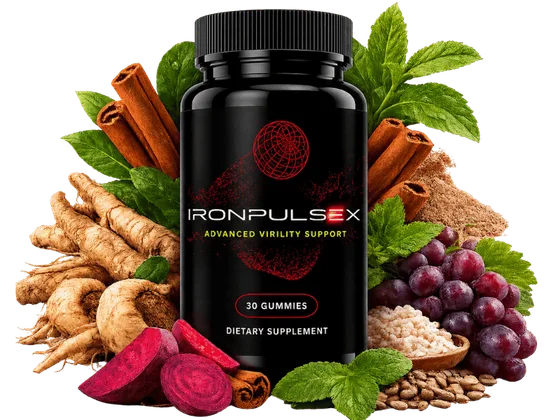
IronPulseX: tongkat ali at the studied dose, nothing hidden
Led by Tongkat Ali 200mg with Ashwagandha and Maca, made in an FDA-registered, GMP-certified facility. From $49 per bottle with a 60-day guarantee.
Frequently Asked Questions
Does tongkat ali cause hair loss?
No human study has shown that tongkat ali causes hair loss. The worry is a theory: tongkat ali can raise testosterone, and some testosterone is converted to DHT, the hormone involved in male pattern baldness. None of the published tongkat ali trials measured DHT or hair, so the link is unproven rather than disproven.
Does tongkat ali increase DHT?
We found no human trial that measured DHT after tongkat ali. The trials measured total and free testosterone, cortisol, mood and strength. Any statement that tongkat ali raises or lowers DHT in people is a guess until it is tested.
Does higher testosterone mean more hair loss?
Not directly. Male pattern hair loss is mainly hereditary: it depends on how sensitive your hair follicles are to DHT, which is set largely by your genes. Many men with normal or high testosterone keep a full head of hair.
I started tongkat ali and I am shedding more. What should I do?
Shedding often has another cause, such as a stressful event, illness, crash dieting or a new medicine, which can show up two to three months later. Take monthly photos in the same light, note when the shedding started and see a board-certified dermatologist if it continues or you see a receding pattern.
Can I take tongkat ali if I use finasteride or minoxidil?
There are no studies combining them. If you are treating hair loss with a prescription, ask the prescribing doctor before adding any supplement that can influence hormones, and bring the label so they can see the exact dose.
Prefer the overview first? Our World Reviews home page lists every guide and our top pick in one place.
References
Prices, guarantee and manufacturing details are taken from the official IronPulseX offer. Every source below was opened and checked. This article is information, not medical advice.
- Leisegang K, Finelli R, Sikka SC, Panner Selvam MK. Eurycoma longifolia (Jack) Improves Serum Total Testosterone in Men: A Systematic Review and Meta-Analysis of Clinical Trials. Medicina (Kaunas). 2022;58(8):1047. — PMID 36013514
- George A, Henkel R. Phytoandrogenic properties of Eurycoma longifolia as natural alternative to testosterone replacement therapy. Andrologia. 2014. — PMID 24386995
- Chinnappan SM, et al. Tongkat Ali standardised aqueous root extract, 2021 randomized placebo-controlled trial, 105 men aged 50–70. Food Nutr Res. 2021;65. — PMID 34262417
- van der Merwe J, Brooks NE, Myburgh KH. Three weeks of creatine monohydrate supplementation affects dihydrotestosterone to testosterone ratio in college-aged rugby players. Clin J Sport Med. 2009;19(5):399-404. — PMID 19741313
- Lak M, Forbes SC, et al. Does creatine cause hair loss? A 12-week randomized controlled trial. J Int Soc Sports Nutr. 2025;22(sup1):2495229. — PMID 40265319
- MedlinePlus Genetics, U.S. National Library of Medicine: Androgenetic alopecia.
- American Academy of Dermatology: Hair loss types and hair shedding.